
How to make perfect poached eggs! I learned this foolproof method for how to poach an egg years ago and never looked back. It’s so easy, anyone can do it!

Poached eggs are one of those things I think people are scared to make at home. But I promise, you can absolutely make them at home. Once you try this easy method, you might find yourself making poached eggs on repeat!
Our poached egg recipe is perfect for breakfast or dinner. (If I’m honest, I probably use this recipe more often for dinner.) I love piling them onto Eggs Benedict, spooning them over creamy homemade hollandaise, adding them to avocado toast, and even adding them to grits or pasta. My son loves them, too. He requests them with toast soldiers (and I can’t really blame him).
Key Ingredients
- Eggs: Use good-quality eggs, and if you can find them, choose those with a bright yellow yolk. I prefer free-range eggs, but go with your favorite brand.
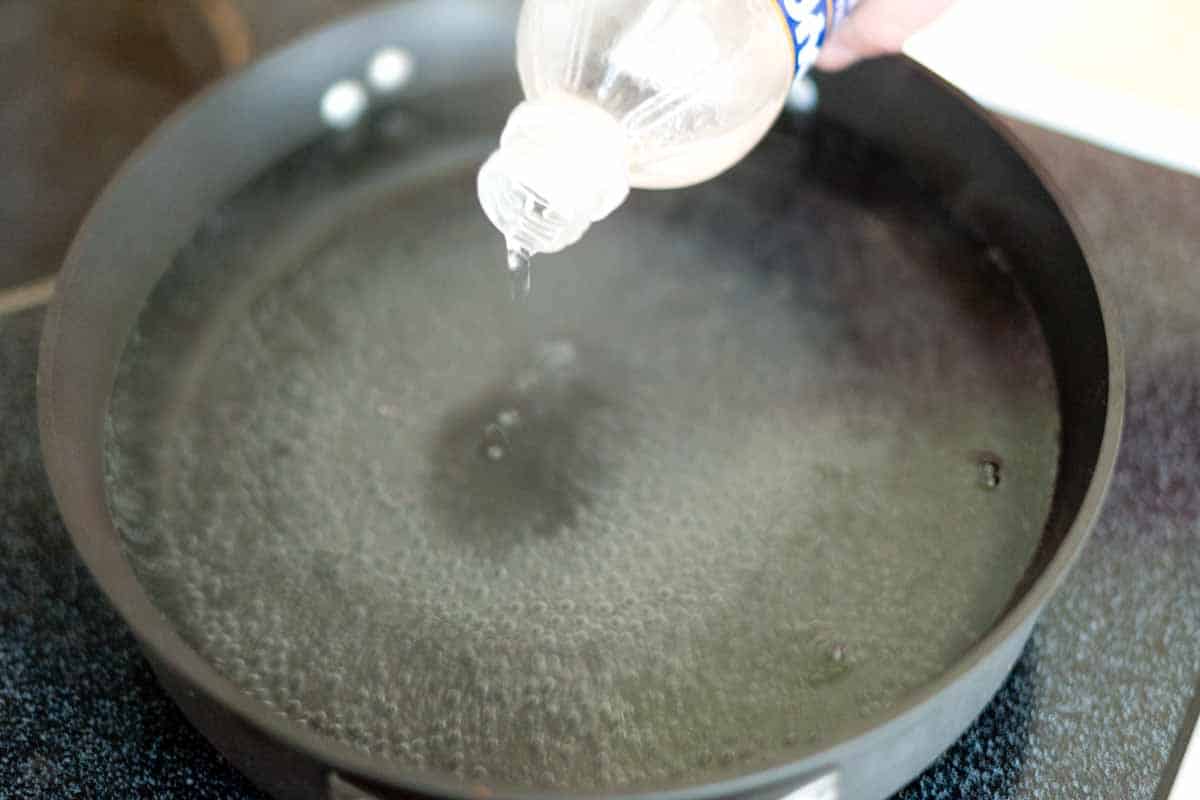
- Vinegar: A little vinegar in the poaching liquid helps firm up the egg whites. You don’t taste it, but I always add a little splash. White vinegar or rice wine vinegar are my go-tos.
- Salt: I like a pinch of salt in the poaching liquid and always sprinkle a little salt on top of my poached eggs once they come out of the water.
Find the full recipe with measurements below.
How to Poach an Egg
Tip 1: Use a wide pot. I like a moderately deep, wide pot when poaching eggs. It gives me enough room to poach multiple, and it is deep enough that the eggs don’t touch the bottom of the pot.
Tip 2: Prepare the poaching water. Fill your pot with water at least 4 inches deep and bring to a gentle simmer. Add a generous pinch of salt and a little bit of vinegar. The salt seasons the eggs, and the vinegar helps the egg whites stay together as they poach. Vinegar is optional, but I use it when poaching eggs. (We only use 1 tablespoon, which really isn’t enough to flavor the eggs.)
Tip 3: Don’t crack your eggs directly into the pot. Instead, break each egg into a clean ramekin or cup as the water heats up. This ensures you can add the eggs quickly and without a lot of mess.
Tip 4: The water should be barely simmering. Before adding your eggs, check the water in your pot and adjust the heat so it is just barely simmering. I like to see little bubbles at the bottom of the pan, with a few actually making their way to the top to burst.
Tip 5: Use the bowl to gently slide each egg out. Carefully submerge the small bowl/ramekin with the egg in the water so you can gently slide it out. This way, you aren’t dropping the egg into the water. Instead, it slides out. Quickly follow with the remaining eggs.
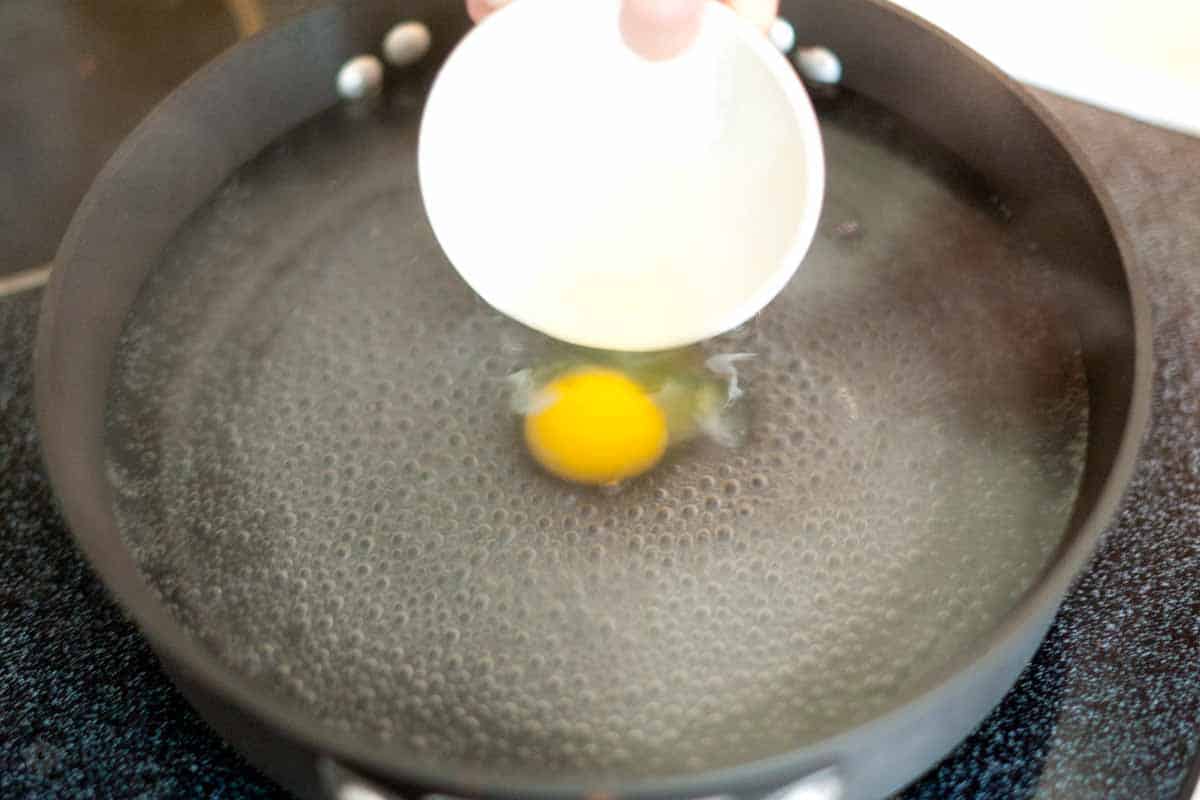
Tip 6: Set a timer. Set a timer for 3 minutes for runny yolks or closer to 4 for eggs with firmer whites and a soft, not runny center. After 20 to 30 seconds, use a slotted spoon to gently turn each egg over.
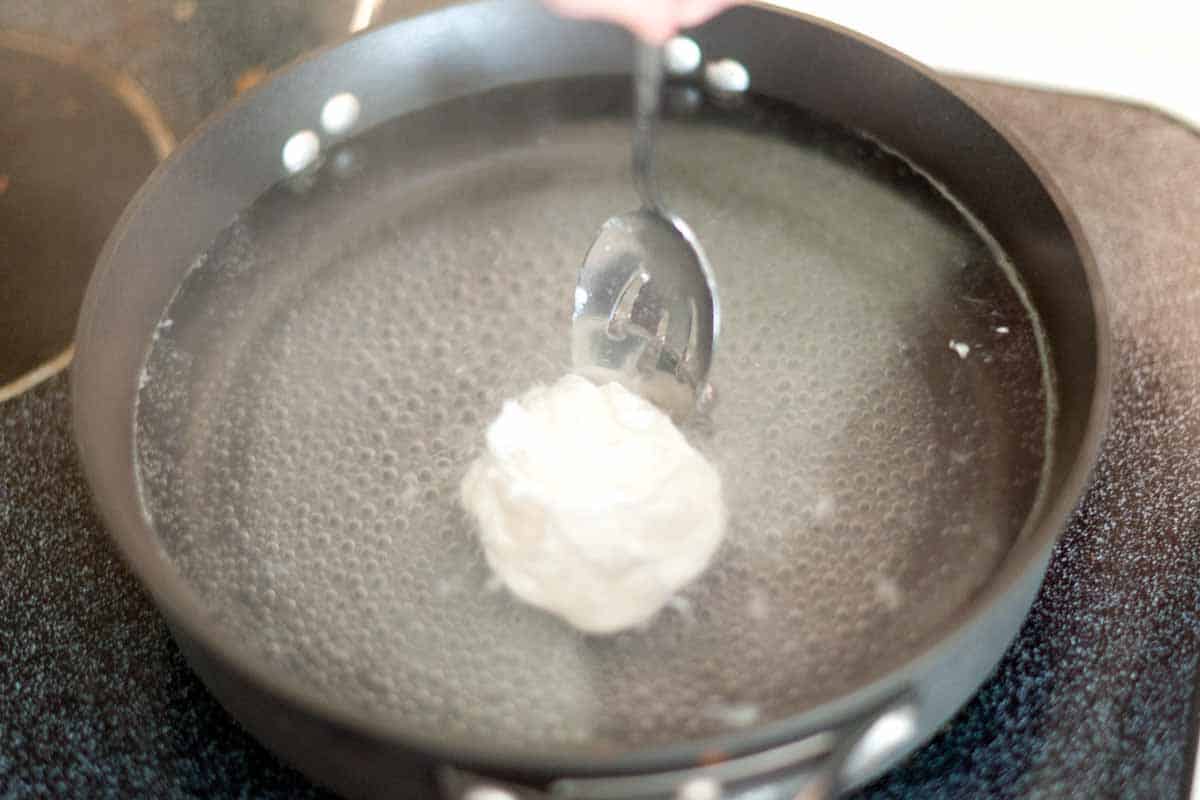
Tip 7: Remove with a slotted spoon. Use a slotted spoon to lift the eggs out of the water. Let them sit on paper towels for 20 seconds to firm up and blot away excess water. Season with salt and pepper, and enjoy!
Troubleshooting
If, even with the vinegar, you have trouble with wispy white bits around your eggs as they poach, use this simple trick: Before poaching, crack your egg into a fine-mesh strainer held over a bowl. The thinnest, runniest part of the white will go through the strainer, leaving the thicker white behind, which sets nicely when poached. Your poaching water will be cleaner, and your eggs will have a more well-defined shape.
More Egg Recipes

Easy Poached Eggs
- PREP
- COOK
- TOTAL
This is our easy recipe for poached eggs. You can poach as many eggs as you need to. If you poach multiple eggs at a time, try not to crowd the water. It might be better to make more than one batch. Fresh eggs work best for this since they hold their shape better than older eggs. Think of the vinegar as a fail-safe. It helps to firm the whites and keep their shape. If you do not want to add it, you can still make poached eggs without it.
You Will Need
1 fresh egg (or more)
1 tablespoon white vinegar or rice wine vinegar, optional
¼ teaspoon fine sea salt, optional
Directions
1Line a small baking sheet or plate with paper towels or a clean dish towel.
2Fill a wide, deep pot with water at least 4 inches deep and bring to a boil over high heat. Lower the heat to low and bring the water to a very gentle simmer. Bubbles should form at the bottom of the pan, but only a few will actually break on the surface.
3Add the vinegar and salt to the water (optional).
4Crack each egg into a small bowl. Carefully submerge the bowl with the egg in the water, then gently slide it out. Quickly follow with any remaining eggs. Set a timer for 3 to 4 minutes for runny yolks (3 minutes for completely runny yolks). After 20 seconds, use a spoon to carefully push the egg white up over the yolk, making it more compact.
5Transfer the poached egg with a slotted spoon to the lined baking sheet or plate and leave for 15 to 20 seconds before serving.
Adam and Joanne's Tips
- Make Ahead: You can poach eggs ahead of time (perfect for brunch or an easy breakfast)! To do this, poach the eggs as directed in our recipe, then carefully transfer them to an ice water bath to cool quickly. Refrigerate the eggs in a covered container submerged in the water for up to 3 days. When ready to serve, fill a pot or cup with very hot (not boiling) water and add your chilled poached eggs. Leave them for about 30 seconds, and then serve.
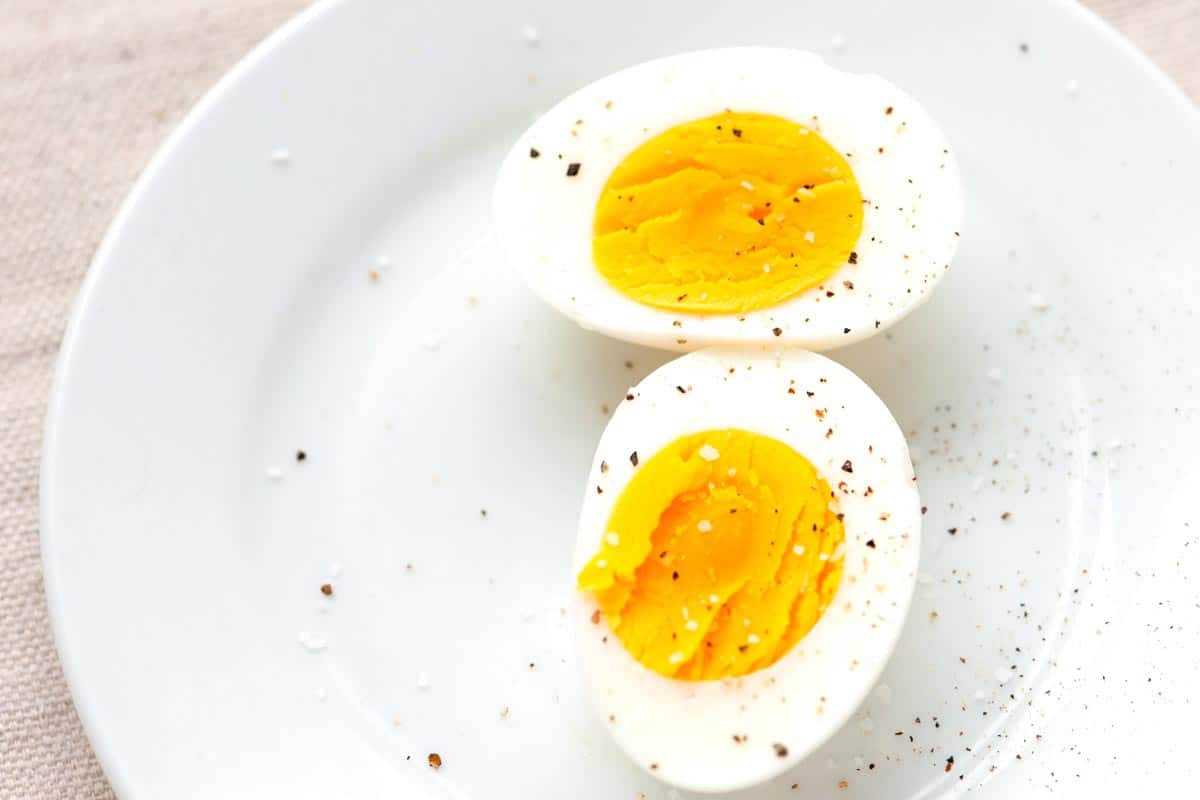
- Cook time: 3 minutes is completely runny, while 4 minutes has some firmer yolk with a soft center.
- Watery egg whites: If you have trouble with wispy white bits around your eggs as they are poaching, use this simple trick! Before poaching, crack your egg into a fine-mesh strainer held over a bowl. The thinnest, runniest part of the white will go through the strainer, leaving behind the thicker white that sets nicely when poached. Your poaching water will be cleaner, and your eggs will have a more well-defined shape.
- Nutritional information are estimates.













Thanks for the tips! Looks like the vinegar keeps the egg white from spreading; first try making a poached egg and came out right by following the recipe.
Great tips hope I can get it better next time
I love to cook and try new recipes.
Thanks great, Lesley!
Great photos! I’ve never scooched the whites over the yolk so mine always awkwardly spread out. Thanks for the tip!
Hi Emily, I do it carefully, and wait for 20 seconds before doing it, but it works nicely.
Tks,Like this!
Thank you so much for showing how to poach an egg! Incredible with the tips given! Hopefully I can make it too.
You’re so welcome! Hope it helped.
Love this post! Great how to!