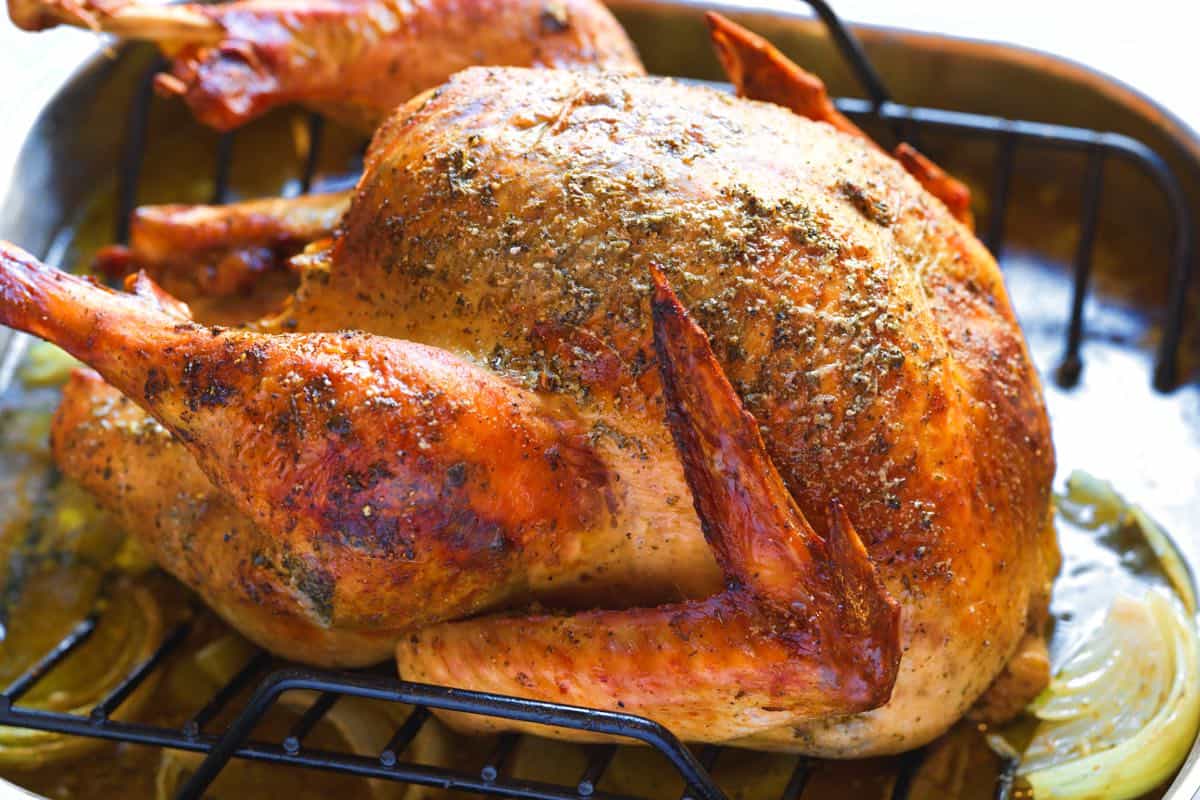
Best Roasted Turkey We've Ever Made
- PREP 30min
- COOK 3hrs 30min
- TOTAL 4hrs
Use our recipe for roast turkey with amazing flavor, soft and tender meat, and crispy skin. We highly recommend it to anyone preparing a Thanksgiving turkey! See the article above for thawing and trussing tips.
We brine and air-dry our turkey; here’s our turkey brine recipe to see how we do it. Air-drying in the fridge the night before we roast also helps with getting that crisp, golden brown skin. You can also make an excellent gravy using the pan drippings (highly recommended).
You Will Need
- Turkey
1 (12 to 20 pound) turkey, thawed, brined (recommended), and trussed
Turkey butter, recipe below
1 large onion, cut into eight wedges
2 carrots, roughly chopped
2 celery stalks, roughly chopped
5 cloves garlic, smashed
8 fresh thyme sprigs
4 sage leaves
2 quarts chicken stock (8 cups or 1.8L)
- Herb Turkey Butter
1 pound salted butter, softened (460g)
1 teaspoon fine sea salt
1 tablespoon coarse ground pepper (5g)
1 teaspoon Worcestershire sauce or Pickapepper sauce
3 cloves garlic, smashed
1 lemon, zested and juiced
½ cup parsley leaves (14g)
¼ cup sage leaves (7g)
2 tablespoons fresh thyme leaves (5g)
Directions
- Prepare the Turkey for Roasting
1Prep the oven: Preheat the oven to 325°F (160°C) and adjust the oven racks so that the turkey will fit.
2Make the butter: Pulse all the turkey butter ingredients in a food processor until chopped. Scrape down the sides and bottom of the bowl, then pulse a few more times until smooth.
3Prep the roasting pan: Place the onion, carrot, celery, garlic cloves, thyme sprigs, sage leaves, and chicken stock in the bottom of the roasting pan. Set a roasting rack into the pan, suspended above the ingredients.
4Melt some of the butter: Add a quarter of the turkey butter to a small saucepan over low heat. Melt the butter, and then remove from the heat. Set aside.
5Prep the turkey: Place the turkey on the roasting rack. Use your hands to create a pocket between the skin and breast meat. Use a knife or scissors to make a hole where the drums meet the thighs.
6Add the butter: Rub the remaining (unmelted) turkey butter into the pockets under the skin and the holes near the thighs. Massage the butter to create an even layer underneath the skin — this is a messy job, but well worth it for the flavor! I use almost all of the butter. Depending on the size of your turkey, you may only need a portion of it. Alternatively, if you have a disposable piping bag, pipe the butter under the skin and into the holes in the legs, then massage the butter around.
7Brush with melted butter: Flip the turkey over so that it is breast-side-down on the roasting rack. Brush some of the melted butter all over the back of the turkey. Flip it back so that the breast side faces up, and then brush the remaining melted butter all over the top (all this butter will make the turkey incredible). Lightly season with salt and pepper.
- Cook the Turkey
1Roast the turkey: Roast for 14 minutes per pound, checking and basting with the fat on top of the broth in the pan every half hour. If the liquid level drops too low in the pan, add some water to replace it. I rotate the pan every hour for even browning. For a 15-pound bird, it will take 3 ½ hours.
2When the turkey is about two shades lighter than you want in color, tent it with foil and roast until an internal thermometer inserted into a few areas (breast and thighs) reads 160°F (71°C). Check both sides of the thickest part of the thigh, away from the bone. As a visual cue, you want to roast until the juices run clear from the thigh after piercing it with a knife.
3Let it rest: Remove the turkey from the oven and let it rest for 30 minutes to 1 hour before carving. To keep warm after resting, place it in an oven set to 200°F (90°C). To prevent it from drying out, loosely cover it with foil.
Adam and Joanne's Tips
- Unsalted butter: When making the turkey butter, if you have unsalted butter instead of salted, add an additional teaspoon of fine sea salt to the butter mixture.
- Helpful equipment: Brine bag or 5-gallon bucket (optional if brining), large roasting pan with rack, disposable piping bag, food-grade nitrile gloves (for massaging the butter), basting/pastry brush, and turkey baster.
- Nutrition facts: The nutrition facts provided below are estimates. We have used the USDA database to calculate approximate values. Calories and fat are likely a bit off because much of the butter melts down to baste the bird and eventually ends up in the bottom of the pan.